
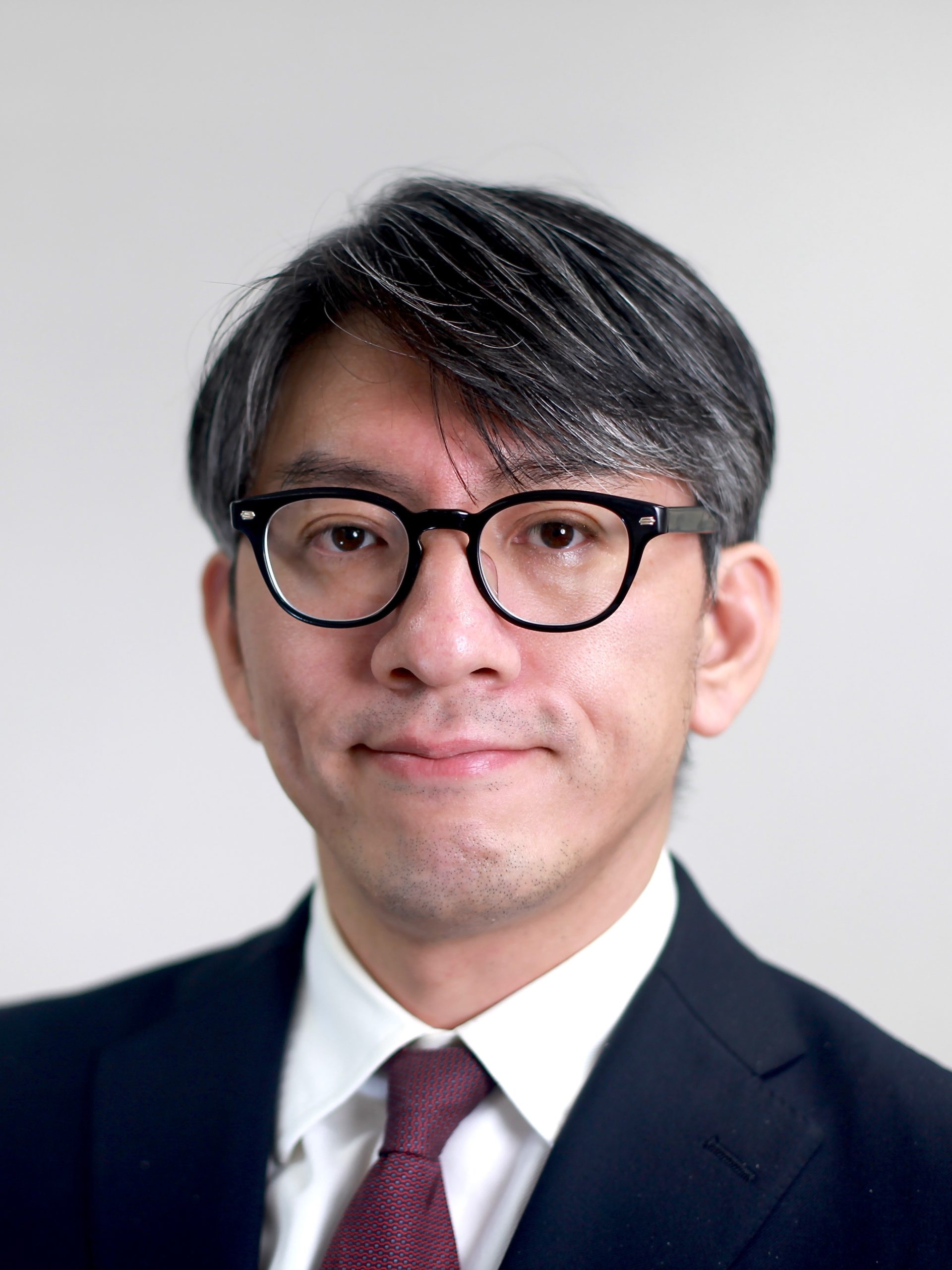
As of January 1, 2026, I have been appointed Professor of Cellular and Molecular Physiology at the Graduate School of Medicine, Kyoto University. My name is Akiyuki Taruno, and I am honored to offer my greetings upon assuming this position.
I entered Kyoto Prefectural University of Medicine in 2001, where I was deeply fascinated by the elegant mechanisms of the human body described in medical textbooks. Reflecting on the researchers who uncovered these principles, I aspired to contribute “a line of my own to the textbook,” which led me to pursue a career in basic research. As an undergraduate, I studied epithelial ion transport in the laboratory of Professor Yoshinori Marunaka, an experience that drew me to physiology as a discipline that elucidates life processes through real-time measurement and control.
After graduating in 2007, I entered the Graduate School of Medicine at Kyoto Prefectural University of Medicine. To further develop my theoretical and experimental training in physiology, I was accepted as a special research student in the Department of Neurobiology Graduate School of Medicine at Kyoto University, then chaired by Professor Harunori Ohmori. Under the guidance of Lecturer Hiroshi Kuba (now Professor of Cell Physiology at Nagoya University Graduate School of Medicine), I used electrophysiological approaches to study synaptic transmission in the cochlear nucleus, central to auditory processing. I remain deeply grateful to Professors Ohmori and Kuba, and to the open, intellectually free research environment at Kyoto University, which continues to shape my research style.
After receiving my Ph.D. in 2010, I joined the laboratory of Professor J. Kevin Foskett in the Department of Physiology at the Perelman School of Medicine, University of Pennsylvania, as a postdoctoral fellow. There, I investigated the physiological function of CALHM1, an ion channel newly identified in association with Alzheimer’s disease, and discovered that it is essential for transmitting taste information from taste bud cells to sensory nerves.
In 2013, I was appointed Assistant Professor in the Department of Molecular Cell Physiology at Kyoto Prefectural University of Medicine, and was subsequently promoted to Lecturer in 2014 and Professor in 2018. During this period, I focused on the molecular mechanisms of neurotransmission for sweet, bitter, and umami tastes. Challenging the classical view that neurotransmitters are released exclusively via synaptic vesicles, we demonstrated that taste cells mediating these taste qualities release neurotransmitters directly through ion channel pores—a fundamentally distinct mode of chemical transmission. I termed this mechanism the “channel synapse” and have since explored its broader biological significance.
Recently, through a body-wide screening of channel synapses, we identified a previously unrecognized population of sensory cells in the pharyngolaryngeal epithelium that trigger airway-protective reflexes such as swallowing and coughing. This work challenges the classical view that vagal nerve fibers themselves act as the sole sensors and instead proposes a new framework in which epithelial cells forming channel synapses with the vagus nerve also function as sensory organs. Dysphagia and chronic cough represent major unmet clinical needs, and these findings may enable endotype-specific diagnosis and treatment. We also elucidated the long-standing molecular and cellular mechanisms of sodium taste perception, revealing another role for channel synapses. Given the association between excessive sodium intake and hypertension, improved understanding of salt taste mechanisms may contribute to public health efforts aimed at reducing dietary salt intake.
The human body maintains homeostasis by sensing and responding to diverse internal and external cues, often without conscious awareness, and its disruption results in disease. However, many aspects of sensory function remain unexplained by existing concepts, and the existence of yet-undiscovered sensory cell types is anticipated. Furthermore, how information transmitted from sensory cells to the brain is integrated by neural circuit mechanisms to generate behavior remains largely unknown. Under the free academic culture of Kyoto University, we will continue to pursue bold “zero-to-one” research that introduces new concepts and advances science, even in the face of strong headwinds.
Finally, in keeping with the long-standing tradition of the Kyoto University School of Medicine in nurturing physician-scientists and leaders in basic medical research, I am strongly committed to the education and development of the next generation of researchers.
I sincerely appreciate your continued support and guidance.